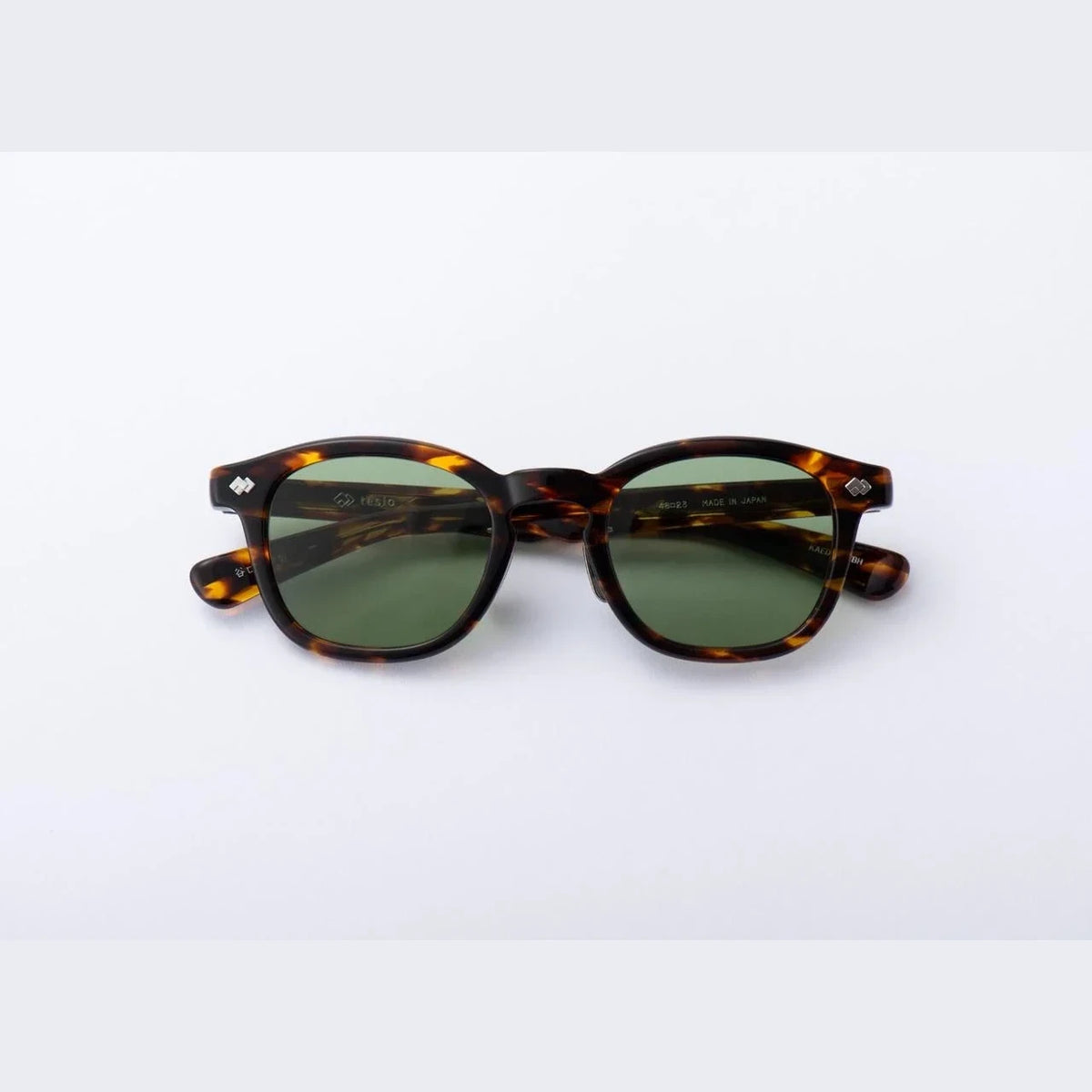
tesio: Craft Sunglasses Made to Fit, from Sabae, Japan’s Eyewear Town
For this interview we travelled to Sabae, a small city in Fukui Prefecture on the Sea of Japan coast. Sabae is Japan's main eyewear-producing town: more than 90% of the spectacle frames made in Japan come from here, and its frames are respected far beyond the country's borders. Driving through the city centre, you see glasses-shaped signs and eyewear workshops on almost every street.
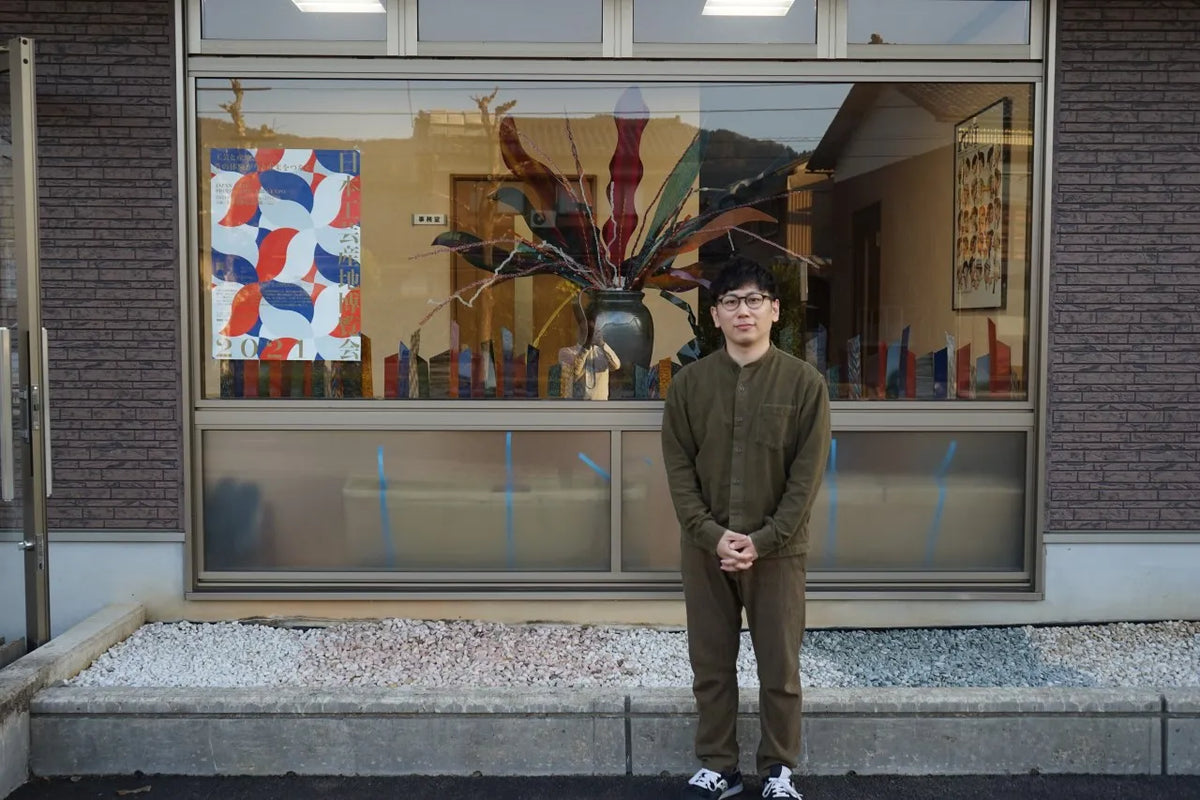
We visited Taniguchi Megane, an eyewear maker founded in 1957, and the company behind the craft sunglasses brand tesio. Our guide at Taniguchi Megane, the person who created tesio, told us about the thinking behind the brand, the history of Sabae and the many steps that go into a single frame.

Comfort comes first
Taniguchi Megane has long focused on one thing above all: glasses you can wear all day without noticing them. Its own eyewear brand, TURNING, is built around that idea of comfort.

In 2020 the company applied the same know-how to sunglasses and launched tesio. The frames use an original Asian-fit design, shaped for East Asian facial features, so they sit comfortably and stay in place.

The goal is simple: a pair of sunglasses you will want to keep wearing for years. The frames are built to be cared for and used for a long time, which feels right for an age that values sustainable things.

Why young craftspeople come to Sabae
The first thing that surprised us at the workshop was how young the team is. Many traditional manufacturers in Japan struggle with an ageing workforce, but at Taniguchi Megane the benches are staffed by people far younger than the image of a traditional craftsman would suggest.

"We keep the company open," our guide explained. "We welcome student visits and take part in events." The biggest of these is RENEW, an annual open-workshop festival across the Sabae area that draws around 30,000 visitors over three days. Taniguchi Megane opens its workshop to the public and runs hands-on sessions.
The city itself actively supports its local industry and encourages people to move there. As a result, job openings at the company attract applicants from all over Japan. Our guide is originally from the Kansai region, and colleagues have moved from Toyama and Chiba. Almost none had worked in eyewear before; everyone starts from zero and learns on the job.

Today eleven craftspeople, both women and men, work at Taniguchi Megane. "Making frames is mostly about what you feel with your hands, so gender makes no difference at all," our guide said. "People imagine it is a mysterious, closed-off trade, but it really isn't. Someone who worked in a clothing shop yesterday can start as a frame maker today."
What makes a Sabae frame different

There are glasses at every price today, so what sets a Sabae frame apart? "The material, and the way it is made," our guide told us.
Quality Sabae frames are made from acetate or celluloid, plant-based plastics derived from cotton. A patterned sheet of the material is cut and shaped through more than 200 steps. Because the colour runs all the way through, scratches can be polished away, so the frames can be looked after and worn for many years.

Inexpensive glasses, by contrast, are usually made from petroleum-based plastic poured into moulds for mass production. Their patterns are printed on the surface and disappear when polished, so they are generally replaced rather than repaired. We were struck by how different two similar-looking frames can be, and by the fact that acetate comes from cotton, a plant-derived material that is also kinder to the environment.
Prescription glasses, our guide pointed out, are really a medical device: eyes are tested, lenses fitted and the frame adjusted to the wearer. That is why TURNING is sold only through opticians who can do this properly.
How Sabae became Japan's eyewear town
Sabae's eyewear history goes back more than a hundred years. It began in the Meiji era, when Japan was shifting from farming to industry. Fukui's heavy winter snow meant nothing could grow for months and farming families had no income, so making glasses became a valuable indoor trade. Craftsmen were invited from Osaka to teach the skills.
During the Second World War, the big eyewear centres in Osaka and Tokyo were badly damaged and many craftsmen were lost. Sabae, largely spared, kept refining its techniques and grew into the production centre it is today.
"For a long time Sabae was a town of craftsmen, and we were not good at telling people why our glasses were good," our guide admitted. "Only in the last few years have we really started to share that." Today, in Japan, eyewear and Sabae have become almost synonymous.
The road was not always smooth. Around 1996, low-price chains selling glasses at a few fixed prices spread across Japan, and much of Sabae's production moved to China. Taniguchi Megane was then making frames for a large eyewear company; when that company collapsed, work almost disappeared.
"But we had decades of skill and know-how in making frames," our guide said. "So we launched our own brand and started making and selling glasses ourselves." That brand was TURNING. The current president, the second generation of the family business, had trained at an optician's shop, and his experience serving customers and seeing many brands still shapes the company's designs.
Sunglasses made to fit
How did tesio begin? "There were a few reasons," our guide said. "Prescription glasses need an eye test, so TURNING is sold through opticians. Sunglasses don't, so they can be sold in clothing and lifestyle shops too. That fitted the company's aim of reaching customers beyond the eyewear trade. And honestly, I just couldn't find sunglasses I wanted to wear myself, so I kept telling the president we should make some!"
Most sunglasses on the market are imported, and the choice tends to be either expensive luxury brands or cheap resin frames. Japan had plenty of well-made glasses designed for local faces, but hardly any sunglasses, and none with the right design at the right price. Our guide planned the brand and brought it to market in about six months. "We already had the skills to make glasses people find comfortable, and we applied them to sunglasses. With that foundation, it came together quickly."

Three things that define tesio
- Asian-fit design. Many imported sunglasses are designed for European and American faces. tesio frames are shaped around East Asian features, taking into account differences in nose height, eye depth and cheekbones, so they sit comfortably.
- Standard, timeless shapes. tesio believes classic frame designs suit everyday life best: a weekend outing with family, exploring the city by bike or a day outdoors.
- Made to last. Like TURNING, tesio frames can be polished, adjusted and cared for, so they can be used for many years.

"People came to think of sunglasses and glasses as cheap things you keep replacing," our guide said. "But the era of mass consumption is ending and people are looking for sustainable things. I'm glad to see that."
The tesio range includes basic models such as SORA and HARE, models with glass lenses such as MACHI and YAMA, and models made in collaboration with the Tokyo bicycle brand tokyobike.

How should you choose? "People often say a certain face shape suits a certain frame, but personally I don't believe it," our guide laughed. "Choose the shape and colour you like. If you love how it looks, it lifts your mood. If you want a lighter look, try a frame in a soft, clear colour with lightly tinted lenses, so your eyes stay visible and the glasses feel less heavy on the face."
Inside the workshop
Next, we stepped into the workshop to see some of the key stages of frame making. Taniguchi Megane designs each frame and selects the materials and parts in-house. A partner workshop then curves the acetate sheet, cuts out the frame shape and shapes the back. When the frames return, work at Taniguchi Megane begins.

- Nose pads. The nose pads are glued onto the front of the frame, then filed into smooth, rounded shapes so they rest gently on the nose. In the photo, the upper frame has just been glued; the lower one has been filed smooth.

- Barrel polishing. The frames are tumbled in a rotating barrel with oil, polishing compound and small chips. This is done in three stages: first with plastic chips, then wooden chips, and finally bamboo chips. By gradually changing the hardness of the chips, the edges are softened and fine scratches disappear. The plastic chips start out white and angular, and wear down to small round pebbles after many cycles.


Running time and the amount of oil are adjusted to each design and even to the season. There is no manual: the craftspeople judge it by feel.
- Fitting the hinges. The joints between the front and the temples are cut by machine so they meet precisely, and the parts are joined with hinges. It is work measured in fractions of a millimetre.

- Hand buffing. Finally, each frame is polished by hand on a spinning cloth wheel called a buff, smoothing the step at the hinges and removing tiny scratches. The white substance in the photo is, surprisingly, mud: applying it to the buff adjusts the friction.


"The frames may look identical, but each one has different scratches," our guide said. "You have to look closely and polish by hand to get a clean finish. People assume a machine could do it, but a machine cannot give that smooth feel and those soft curves."
Made one by one, with care
Glasses and sunglasses from Taniguchi Megane have a gentle, warm character. Comfort reached by always thinking of the wearer first, natural materials that sit softly on the face, and careful handwork kept up since the company's founding: together, they create a feel that only Taniguchi Megane can give.

Our sincere thanks to everyone at Taniguchi Megane for taking so much time to show us around and share their story.